
Corten steel and Coastal Sites
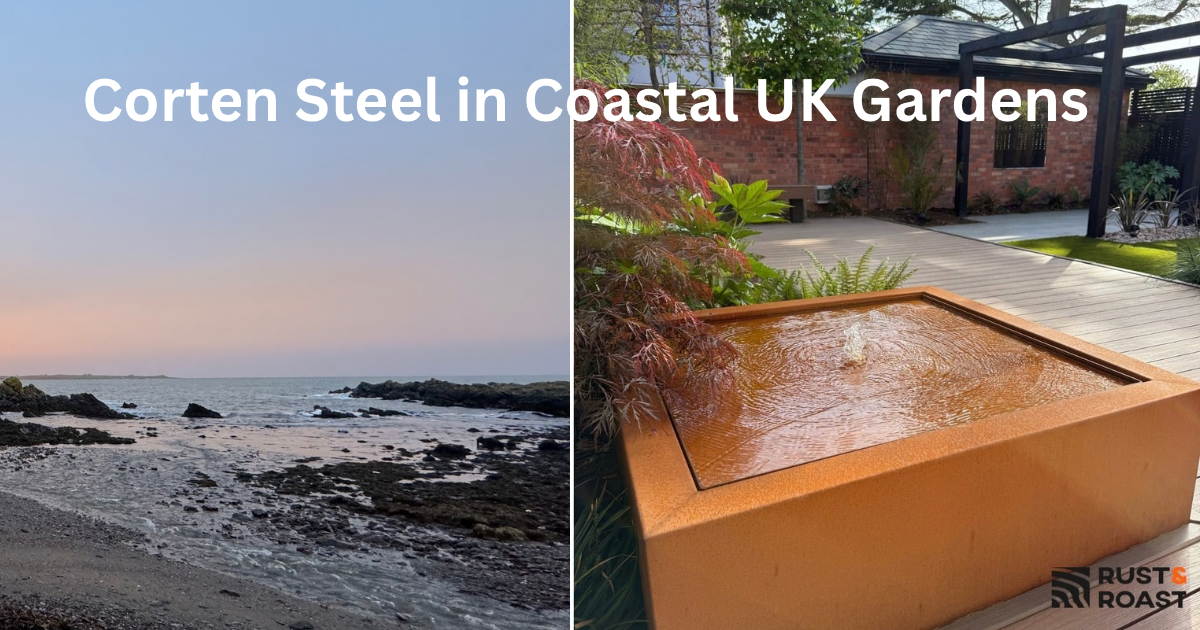
Can Corten steel be used in coastal UK gardens? Learn how salt air affects weathering steel, how the protective patina forms, and how to protect Corten steel near the sea.
Using Corten Steel on Coastal Sites What You Need to Know:
Corten steel has become one of the most sought-after materials in contemporary landscaping and garden design. Its rich, warm patina and natural weathered appearance make it a perfect complement to timber, stone, and planting schemes.
At Rust & Roast, we specialise in Corten steel products because of their durability, character, and low maintenance. However, when installing Corten steel in coastal locations, there are some important factors worth considering.
What is Corten Steel?
Corten Steel also known as weathering steel, is a specially designed steel alloy that forms a stable rust-like patina when exposed to the elements. Unlike ordinary steel, this rust layer actually protects the metal beneath, preventing further corrosion and eliminating the need for painting or protective coatings. Over time, the steel develops its distinctive deep orange-brown finish that continues to mature and evolve.
This makes Corten steel ideal for:
Planters
Garden edging
Pergolas
Fire pits
Architectural landscaping features
How Long Does the Patina Process Take?
The patina forms naturally outdoors and develops best in environments that alternate between wet and dry conditions.
In the UK climate, this process can take anywhere from six months to several years, depending on factors such as:
rainfall
humidity levels
airflow
exposure to sunlight
During this time, the steel gradually transitions from its original grey appearance to the deep orange and brown tones associated with mature Corten steel.
When the Patina May Struggle to Stabilise
For the protective layer to stabilise properly, the surface needs to dry out periodically.
If conditions remain constantly damp, or if the steel surface is contaminated with dirt, salt, or debris, the patina may not form correctly. In these situations, the oxidation process can continue in the same way as it would with ordinary steel, potentially leading to ongoing corrosion rather than a stable protective layer.
This is why environmental factors — particularly coastal exposure and salt deposits — should always be considered when specifying Corten steel for outdoor projects.
The Impact of Salt in Coastal Environments
In coastal locations, airborne salt can significantly influence how Corten Steel behaves.
Salt particles carried in sea air often settle on exposed surfaces. When combined with moisture, these deposits can accelerate the corrosion process and prevent the protective patina from stabilising in the way it normally would. While designed to be weather-resistant, the chloride ions in salt (from marine air, sea spray, or road salt) cause the rust to become flaky, porous, and continuously active rather than dense and protective.Instead of forming a compact, protective layer, the rust may continue to develop unevenly, which can lead to:
ongoing surface corrosion
rust staining on surrounding materials
premature degradation of the steel
This is why projects located very close to the shoreline or directly exposed to sea spray require additional consideration when specifying Corten steel.
Managing Salt Exposure
There are several ways to help Corten steel perform better in coastal settings.
Good design choices can make a significant difference, including:
positioning steel elements in sheltered areas of the garden
avoiding locations where salt spray is directly carried by prevailing winds
ensuring the steel surface can dry out regularly
Occasionally rinsing the steel with fresh water can also help remove salt deposits before they accumulate.
Protecting Corten Steel in Coastal Environments:
In coastal environments where salt exposure is unavoidable, some designers choose to seal the Corten surface once the desired patina has developed. This can help stabilise the finish and slow down further corrosion caused by salt deposits.
One commonly used product for this purpose is Owatrol Corten Steel Varnish produced by Owatrol.
This specialist varnish is designed specifically for weathering steel surfaces, helping to lock in the rusted patina while providing an additional protective barrier against moisture and salt.
How It Works
Once the Corten steel has reached the colour and texture you want, the surface can be cleaned and sealed using the varnish. The coating works by:
Binding the rust layer so it does not continue to shed or run
Creating a clear protective film over the surface
Helping to reduce the effects of salt exposure
Preventing further uncontrolled oxidation
This is particularly useful in locations where:
Gardens are very close to the sea
Surfaces receive frequent salt spray
Rust staining from runoff needs to be minimised
Things to Consider
Applying a protective varnish does slightly change the philosophy behind Corten steel.
Traditionally, weathering steel is designed to age naturally without coatings, forming its own protective patina over time. Sealing the surface effectively freezes the appearance at that stage.
However, for coastal projects or architectural installations where longevity and control over the finish are important, using a product like Owatrol’s varnish can be a sensible compromise.
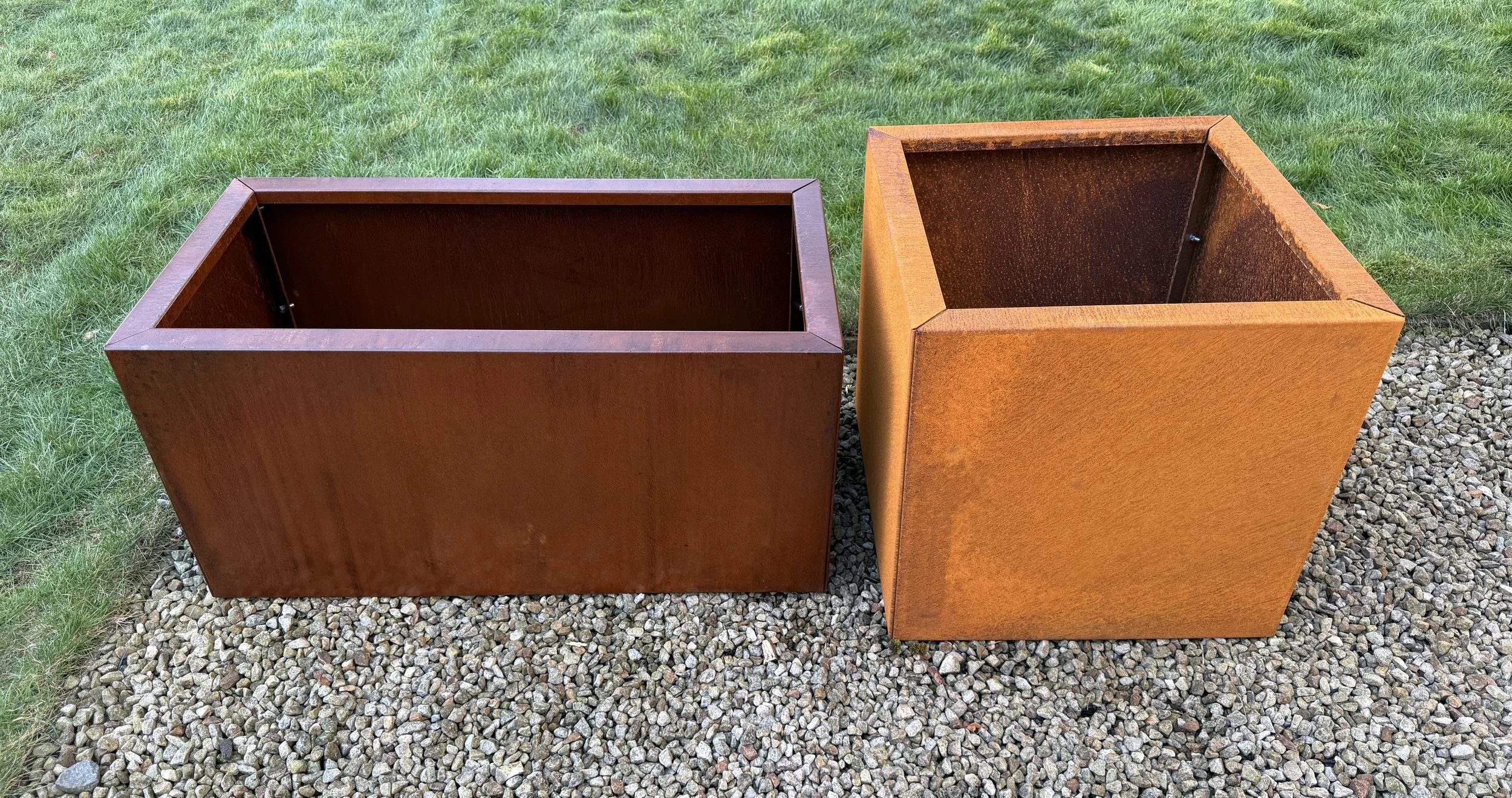
Pictured above is two of our Link Corten Steel Planters, the one on the right has been left to weather naturally and the one on the left has been treated with Owatrol Corten Steel Varnish.
A Practical Approach
At Rust & Roast, we generally recommend letting Corten steel develop its natural patina first before considering any sealing treatment.
If your project is located on a highly exposed coastal site, a protective coating can help ensure the steel maintains its character while reducing the long-term effects of salt exposure.
As with most natural materials, the environment will always influence the final appearance, and that is part of what makes Corten steel such a beautiful and dynamic material to work with.
Important: Not Suitable for Fire Pits or High Heat Applications!While protective coatings can be beneficial in some situations, it is important to understand that Corten steel varnishes should never be applied to fire pits or any surfaces that will be exposed to direct heat or flames.
When Alternatives Might Be Better:
For highly exposed sites directly facing the sea, materials such as:
Marine grade stainless steel
Aluminium
Powder coated steel
may provide greater long-term durability.
However, if the aesthetic of Corten is essential, careful placement and occasional rinsing with fresh water can help reduce salt build-up.
The Beauty of Natural Materials
One of the reasons designers love Corten Steel is that it ages naturally and tells a story over time. Each installation develops its own unique character depending on its environment.
This makes it particularly beautiful when paired with materials like:
Timber and in particular charred Douglas Fir (Shou Sugi Ban)
Natural stone
Gravel gardens
Ornamental grasses
As the patina evolves, the steel develops a unique character that reflects its surroundings and the passing of time.
Thinking About Using Corten Steel?
If you're planning a landscaping project and considering Corten steel, we’re always happy to advise on whether it’s the right choice for your location.
At Rust & Roast, we design and supply high-quality Corten steel products built to last and crafted to age beautifully.
Explore our range or get in touch to discuss your project.
Rust & Roast
Natural materials. Honest design. Built to weather beautifully.